If you are searching for a detailed and trustworthy comparison between the most powerful guitar processors available today, understanding Quad Cortex Mini vs Full Quad Cortex is essential. The debate around Quad Cortex Mini vs Full Quad Cortex has become one of the most searched topics among guitarists, producers, and music creators worldwide, especially as musicians look for compact yet professional-grade digital amp solutions. Whether you are a touring guitarist, a home studio creator, or a tone enthusiast, choosing between Quad Cortex Mini vs Full Quad Cortex can significantly impact your sound, workflow, and performance experience.
As Neural DSP continues to dominate the global modeling market, the discussion of Quad Cortex Mini vs Full Quad Cortex has gained massive traction across foreign countries, online forums, and professional music communities. Both units offer cutting-edge neural capture technology, studio-quality effects, and ultra-realistic amp modeling, but they are designed for different types of users. This is why the Quad Cortex Mini vs Full Quad Cortex comparison is crucial for anyone investing in next-generation guitar technology.
With increasing demand for portable rigs, smart digital processors, and flexible live-performance gear, musicians are actively researching Quad Cortex Mini vs Full Quad Cortex to understand which device best fits their needs. While the Full Quad Cortex is known for its advanced controls and extensive connectivity, the Quad Cortex Mini appeals to users who prioritize portability and value without compromising tone quality. In this guide, we explore Quad Cortex Mini vs Full Quad Cortex in depth, breaking down every key difference that matters so you can make a confident, informed decision in today’s competitive global music gear market.
Overview: What Is Quad Cortex and Why It Matters
Neural DSP’s original Full Quad Cortex exploded onto the scene as one of the most powerful guitar processors ever made, with next-generation capture technology, deep neural network modeling, and a touch-screen workflow. Shortly after, the Quad Cortex Mini was introduced as a streamlined, more affordable alternative that retains much of its parent’s sound quality.
When comparing Quad Cortex Mini vs Full Quad Cortex, it’s essential to understand how both devices deliver amp modeling and effects processing while targeting slightly different user needs and budgets.
Design & Build Quality: Portability vs Full Control
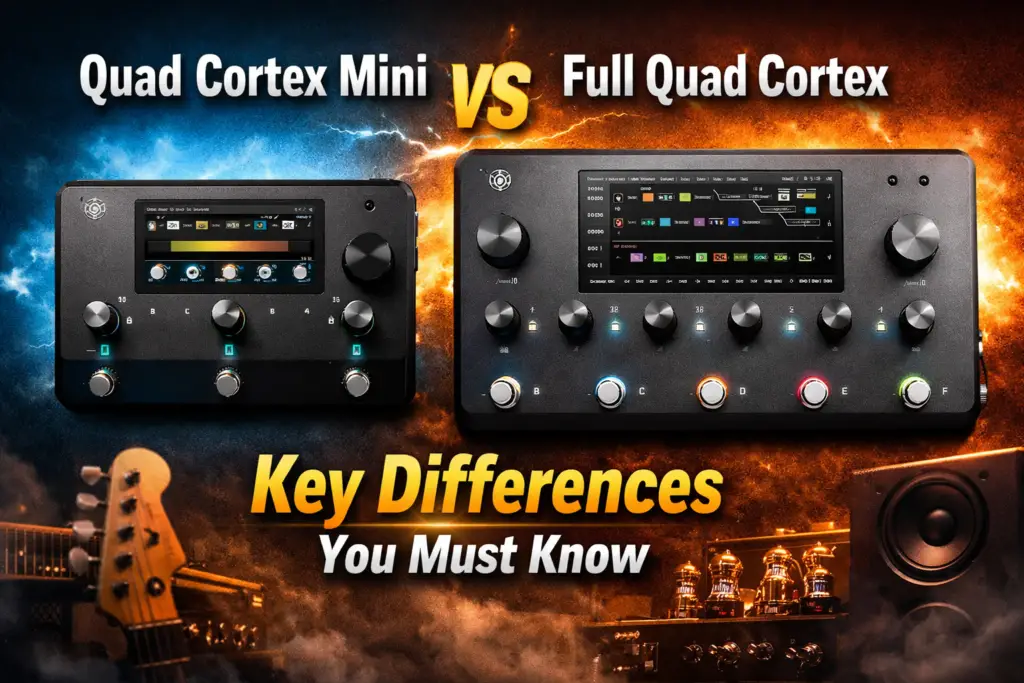
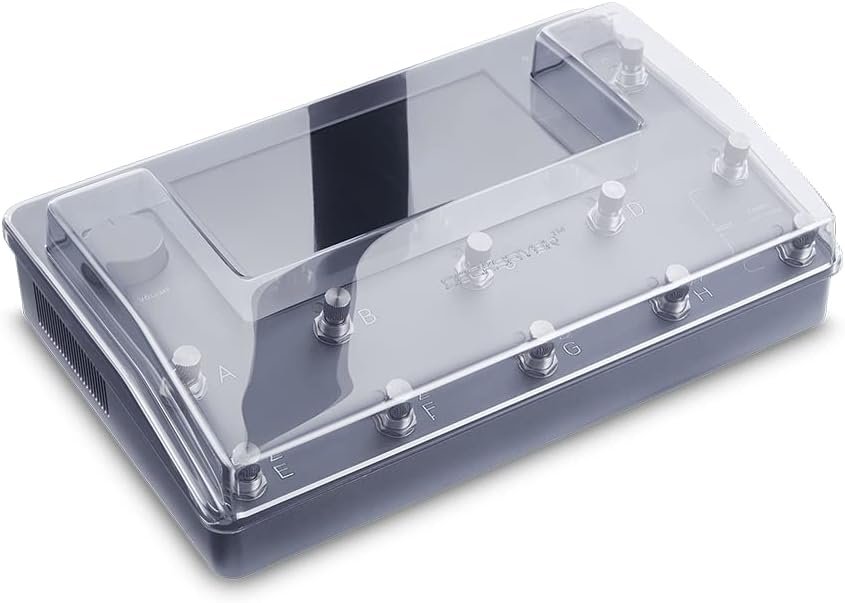
Full Quad Cortex shines with a large touchscreen, multiple footswitches, assignable knobs, and a rugged metal chassis. Its size and layout make it ideal for players who need comprehensive hands-on control during performances and studio sessions.
On the other hand, the Quad Cortex Mini prioritizes portability. It offers a more compact footprint and fewer physical controls, but still integrates a responsive display and intuitive navigation. For users who frequently travel, gig in small venues, or have limited pedalboard space, this makes the Quad Cortex Mini vs Full Quad Cortex decision focused on space and mobility.
Processing Power & Architecture
Both units share a similar core DSP architecture, allowing them to run high-fidelity amp models, cabinet simulations, and multi-effect chains. However, the Full Quad Cortex supports more simultaneous blocks and higher overall processing capacity, which is particularly useful for complex rigs and multi-instrument setups.
In the Quad Cortex Mini vs Full Quad Cortex comparison, the Mini still handles rich rigs with plenty of modeling depth, but the Full unit can maintain larger, more layered signal chains without pushing its hardware limits.
Sound Quality & Tone Capture
A major highlight for both units is Neural DSP’s Capture technology, which allows users to sample real amplifiers and cabs with stunning accuracy. When comparing Quad Cortex Mini vs Full Quad Cortex, most players report minimal difference in raw model quality — meaning both units can rival physical amp tones with professional calibration.
That said, some advanced features like expanded mic placement options and deeper cabinet modeling tweaks are easier to access on the larger Full Quad Cortex interface.
User Interface & Workflow
One of the biggest practical differences between the Quad Cortex Mini vs Full Quad Cortex is workflow. The Full Quad Cortex’s larger color touchscreen and additional knobs/buttons make editing, routing, and performance tweaks faster and more intuitive — especially on stage.
The Quad Cortex Mini, while still offering a clear interface, relies more on menus and multi-function controls due to space constraints. This trade-off is worth considering if you expect to tweak presets live or dive deep into signal chain editing.
Connectivity & Expandability
When it comes to I/O and expandability, the Full Quad Cortex has the edge. It supports multiple ins and outs, extensive MIDI control, and deeper integration with studio and live rigs. It’s designed to be the central hub of complex setups.
The Quad Cortex Mini, though more limited, still provides essential connectivity such as stereo outputs, expression inputs, USB audio interface capability, and MIDI support — making it more than capable for small to mid-sized setups.
In a Quad Cortex Mini vs Full Quad Cortex comparison from a connectivity standpoint, the Full model is the choice for professionals who require wider routing and flexible interfaces.
Performance in Live Settings
For many touring musicians, the reliability and versatility of the processor matter most. The Full Quad Cortex excels with multiple preset banks, rapid switching, and a robust hardware design that holds up under demanding conditions.
The Quad Cortex Mini also performs admirably live, especially when paired with external footswitches or controllers. Its smaller size even becomes an advantage on crowded pedalboards. However, some power users may prefer the additional instant control provided by the Full model.
Studio Integration & Recording
When used as a USB audio interface, both the Quad Cortex Mini vs Full Quad Cortex deliver high-quality, low-latency input for recording guitar tracks directly into DAWs. Both units allow you to capture tones with precision, though the Full version’s deeper connectivity options can make it easier to integrate into complex studio setups.
For home producers or solo artists, the Mini offers everything needed for professional-quality recording without the premium desk space required by the larger unit.
Price & Value Proposition
A critical factor in any gear decision is value. The Full Quad Cortex is priced at the higher end of the modeling market, reflecting its advanced hardware, size, and expanded feature set. Conversely, the Quad Cortex Mini offers most of the essential modeling power at a lower price point, making it a popular choice among budget-minded guitarists and hobbyists.
In the Quad Cortex Mini vs Full Quad Cortex comparison, value comes down to your intended use: if you want unmatched control and expandability, the Full model earns its price. But if you want top-tier tone and portability without paying for extra bells and whistles, the Mini is one of the best deals in advanced amp modeling today.
Which One Should You Choose?
Here’s a simple way to think about the Quad Cortex Mini vs Full Quad Cortex decision:
- Choose Full Quad Cortex if you need extensive control, rich connectivity, and a stage-ready interface with multiple assignable controls.
- Choose Quad Cortex Mini if you want tremendous tone quality, compact size, and excellent value for home practice, recording, or smaller live setups.
Both units deliver impressive performance that ranks them among the best modeling processors in 2025 and beyond.
Final Verdict: Quad Cortex Mini vs Full Quad Cortex
In the evolving world of digital guitar processing, the comparison between Quad Cortex Mini vs Full Quad Cortex remains one of the most important decisions for musicians in 2025 and beyond. Both devices showcase Neural DSP’s industry-leading technology, delivering world-class amp modeling, realistic captures, and studio-grade effects that appeal to guitarists across genres and countries. However, the right choice ultimately depends on how and where you plan to use your gear.
The Quad Cortex Mini vs Full Quad Cortex debate clearly highlights a balance between portability and power. The Quad Cortex Mini stands out as a compact, cost-effective solution that maintains premium sound quality, making it ideal for home studios, traveling musicians, and minimalist setups. Meanwhile, the Full Quad Cortex continues to dominate professional stages and complex studio environments thanks to its expansive controls, deeper routing options, and unmatched flexibility.
As global demand for smart music technology continues to rise, understanding Quad Cortex Mini vs Full Quad Cortex helps musicians invest wisely in future-proof gear. Both units represent the pinnacle of modern amp modeling, ensuring long-term value, firmware updates, and compatibility with evolving workflows. No matter which option you choose, you are stepping into a new era of tone shaping that rivals traditional amplifiers while offering digital convenience.
For more expert gear comparisons, trending music tech guides, and global gadget insights, keep exploring trusted content at gadgetsyte.com